

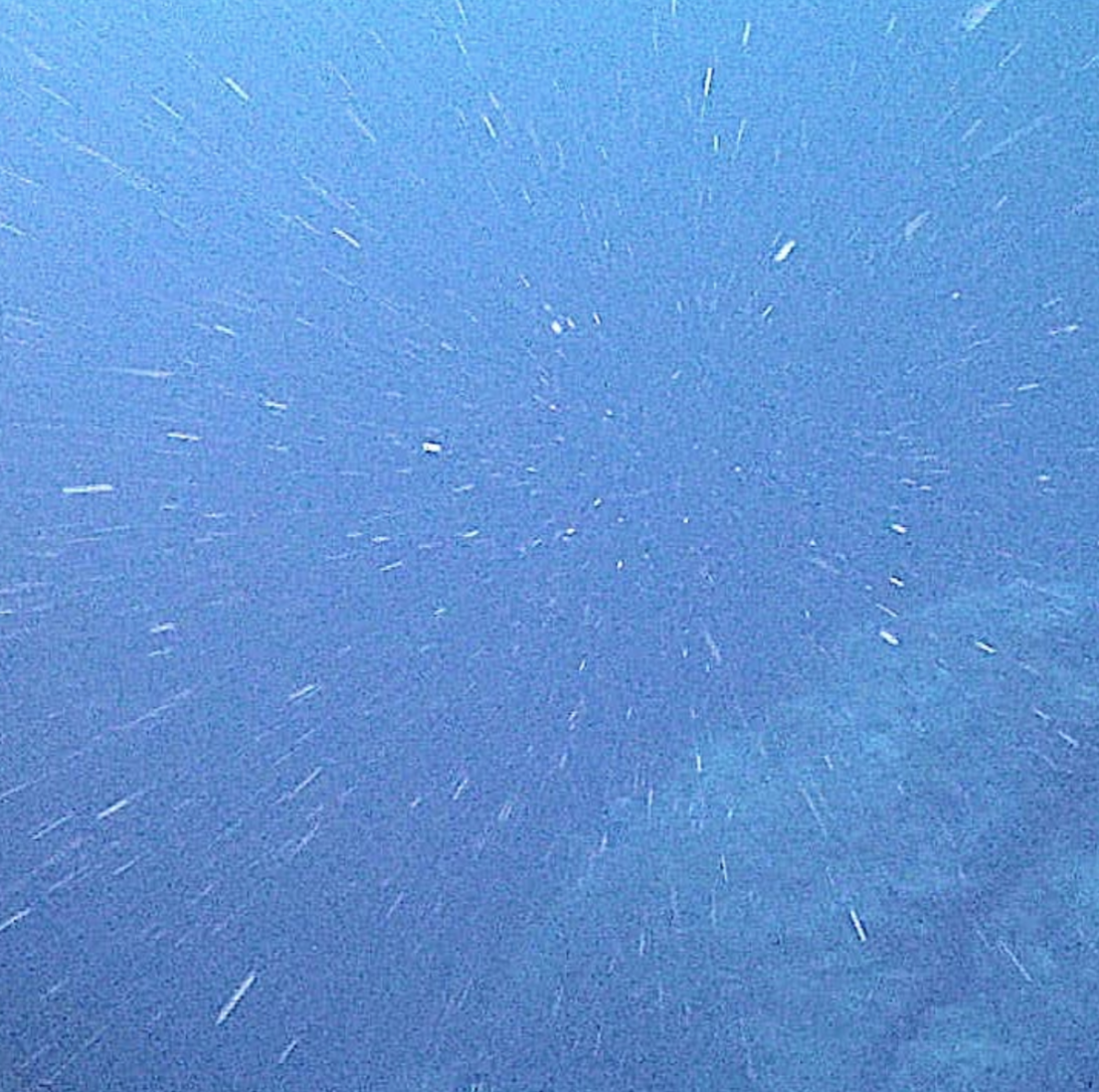
As winter storms pummel much of the world with snow falling from the sky, it’s worth thinking about a different kind of snow, one that falls beneath the ocean’s surface. Known as marine snow, this gradual yet steady shower of organic material falls from upper waters to the deep sea. Its slow descent may resemble snow flurries, but marine snow is not made of ice crystals. Instead, it consists of decaying organisms, sand, and fecal matter, all of which play a crucial role in ocean ecosystems.
The marine snow does not complete its fall in a few hours, unlike snow, which we are familiar with. Some flakes can fall for weeks until reaching the ocean floor. Additionally, as the particles descend deeper, they can grow in size by clumping together with other flakes of marine snow. Some “snowflakes” can reach several centimeters in diameter before reaching the bottom. The larger the snowflake is, the faster it falls through the water.
In all stages of descent, marine snow is valuable. The continuous rain of organic matter offers a food source to middle-dwelling sea animals. Once the particles reach the bottom of the sea, they offer carbon and nitrogen to deep-sea creatures who rely on such materials for survival.
The percentage of marine snow that is not consumed by animals in shallow waters becomes one with the muddy mixture coating the ocean floor, incorporating with the other decomposed materials. Around three-quarters of the ocean floor is covered in this thick, deep-sea ooze. Accumulating around 6 meters every million years, this sludge is high in nutrient rich materials and continues to be a key seafood source for deep-sea ecosystems.
A crucial part of marine snow and nutrient cycling is marine animals, especially whales. Known as the Whale Pump, whales assist and speed along the task of nutrient cycling, like the process of marine snow. Whales have the unique ability to travel to extreme depths and return to the surface with ease. Sperm whales, for example, can regularly dive 900 meters deep, allowing these creatures to hunt for squid in nearly total darkness. Once whales return to the surface, they release their nutrient rich deep-sea hunts through fecal matter, also known as poop, near the surface. Fecal matter sinks, adding to the marine snow cycle, giving nutrient-rich materials to deep-sea organisms. Whales continue hunting in the depths of the ocean, ingesting needed nutrients, then releasing the rest through poop for other sea creatures.
So, as you shovel sidewalks and put on boots to plow through winter weather, just think how animals in the oceans are experiencing some snow flurries, too.