
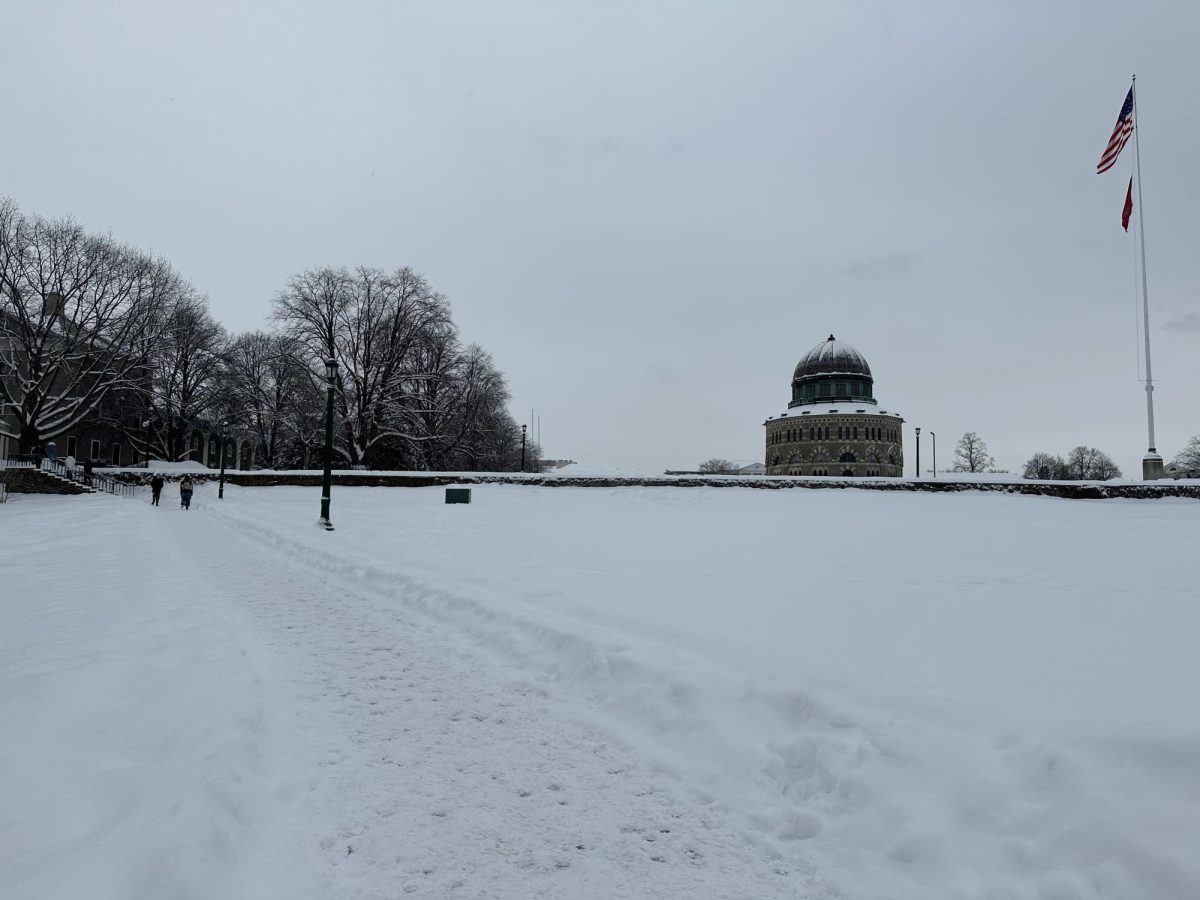
The freezing winds, plunging temperatures, and rising heaps of snow that covered Union College along with most of the eastern United States last weekend might seem like a definitive sign that winter is in full swing. However, this extreme weather event can actually be linked to global warming.
Global warming is the long-term increase in Earth’s average temperature, caused by increasing accumulation of greenhouse gases in the atmosphere that trap the sun’s heat. These gases are primarily a result of human activity, especially the burning of fossil fuels like coal, oil, and natural gas for energy. Global warming itself is just one aspect of climate change, a broader term that the U.S. Geological Survey describes as “increasing changes in the measures of climate over a long period of time, including precipitation, temperature, and wind patterns.”
While it may seem counterintuitive, this gradual increase in Earth’s temperature doesn’t just show up as hotter days during the summer. Instead, it causes all weather patterns to become more extreme, presenting as developments like hurricanes, floods, and enormous snowstorms. Schenectady received 14 inches as recorded by News10, with the storm peaking on Sunday, January 25. Both on campus and in town, roads and walkways were buried in snowfall during the hours of squalls. But how do warmer temperatures actually lead to more snow?
An overall warmer atmosphere causes greater levels of evaporation from both land and water, increasing the amount of water that can fall as rain or snow. Warmer air also holds more moisture, specifically around 4% more water vapor per degree Fahrenheit as noted by research organization Climate Central. When temperatures rise without getting above freezing point, as seen in winters under global warming, the combination of these factors can result in more extreme precipitation such as heavier snowstorms.
Many other natural events like wildfires, floods, hurricanes, and tornadoes are also affected, becoming both more intense and more frequent as global warming interrupts normal weather patterns. While it might be easy to forget about our planet’s increasing temperature during winter’s freezing months, its effects still have a huge impact on both our climate and our daily lives.