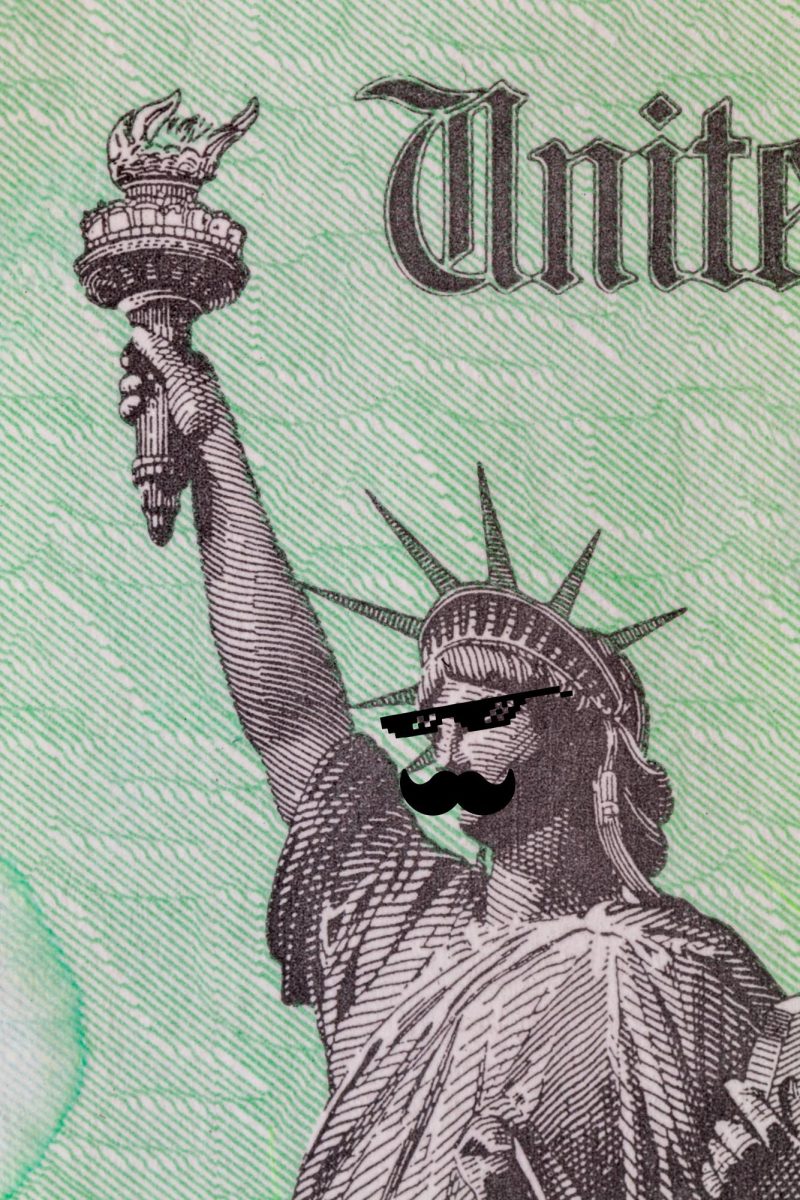
Have you recently turned on the news or read an article about the current state of American politics? It has become increasingly difficult to find positive or reassuring headlines. Instead, Americans are met with stories of government shutdowns, political infighting, and the release of heavily redacted documents related to the Epstein case. These events raise an important question: What standards of professionalism should a government uphold, and how have those standards deteriorated so rapidly in recent years? More bluntly, is the government becoming a joke?
As of February 13, 2026, the United States government has entered a partial shutdown due to the Department of Homeland Security’s (DHS) previous funding lapsing and Congress not reaching an agreement on a new budget in time. This lapse has disrupted essential services, including immigration operations, TSA screening, and FEMA preparedness. For federal workers and everyday travelers, the shutdown has caused interruptions to daily life. Beyond inconvenience, it reflects a deeper issue, which is the inability or unwillingness among elected officials to prioritize effective governance.
Concerns about professionalism extend beyond budget failures. The emergence of the Epstein files being released has further revealed the morality and ethics of the United States government. During hearings related to these documents, Attorney General Pam Bondi, who is a Trump appointee, avoided answering direct questions from survivors and even refused to look in their general direction. Rather than offering empathy, she demanded the Democrats to apologize to Donald Trump. In such a harsh case involving sexual exploitation and trauma, this response completely dismissed and deeply disrespected the survivors’ attempt to seek long overdue justice.
Much of the current political chaos can be traced to the normalization of behavior that would once have been considered disqualifying. President Trump’s continuation in office despite a felony conviction has marked a turning point in government expectations. Rather than holding leadership to ethical standards, many Americans appeared to accept or celebrate this precedent. As a result, unethical behavior has increasingly been met with indifference rather than consequence.
This chaos is fueled by the outrageous statements and postings President Trump has made on various social media outlets. Since his re-election, only a plethora of unprofessional comments have been made. WIth a different person in office, these posts would cause outrage from the country. Today, however, such harsh comments often pass with little sustained criticism, reinforcing the idea that professionalism is no longer expected from those in power.
The contrast with past administrations highlights this shift clearly. When former President Barack Obama wore a tan suit, the incident called “Suitgate,” caused widespread controversy. Yet far more serious behavior now causes minimal response. For instance, when President Trump shared racially offensive content involving Barack and Michelle Obama pasted on monkeys, media attention was brief and consequences were limited. This inconsistency exposes a troubling hypocrisy in how political behavior is judged.
Overall, I believe that the standard for professionalism has strongly decreased, largely due to the time period we are in and the unruly influence of the Trump administration. Professionalism and accountability should not be debatable or depend on partisan issues. If Americans continue lowering expectations for those in power, we risk turning our own government into the laughing stock of modern politics.