
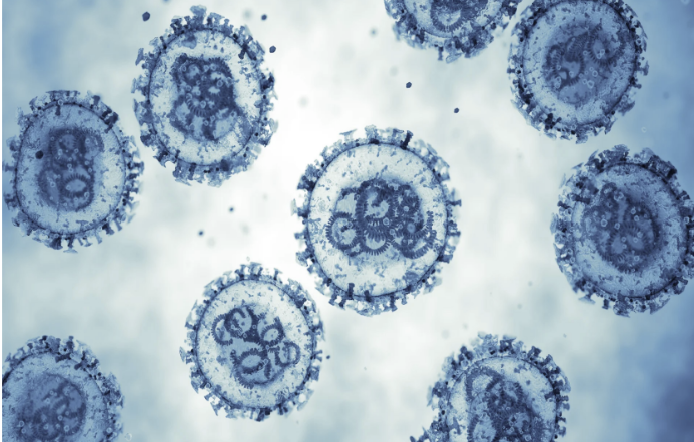
It only took one headline for the internet to panic again. A rare virus entered the news cycle, social media filled with speculation, and suddenly people were asking the same question they asked five years ago: “Could this become another pandemic? Should we be worried?” The public reaction to the hantavirus reveals something much larger than merely a concern over a disease. It reveals how deeply COVID has affected and changed the way society responds to health threats.
To be clear, hantavirus is serious. The disease is primarily spread through contact with infected rodent droppings, urine, or saliva and can result in severe respiratory illness and carrier a high fatality rate. However, unlike COVID-19, hantavirus is extremely rare in the United States and is not known for widespread transmission. Hence, the average person is far less likely to encounter this virus than the internet reaction would suggest. Yet, fear spreads faster than statistics.
Part of these reactions is likely to stem from how COVID was dismissed as “unlikely” to spread rapidly but became life-altering. In early 2020, uncertainty and delayed responses cost lives, and now, people carry that lingering fear of not taking early warnings seriously. As a result, society has become hyperaware of emerging diseases and now any virus feels like it could become the next global crisis. But, there is a difference between awareness and panic.
Social media has amplified this divide by incorporating algorithms that are designed to reward fear because it keeps people engaged. A disease with low probability of widespread transmission can suddenly appear to be catastrophic when people are not given scientific context. Instead of helping people understand risk appropriately, online discourse makes the public think of the worst-case scenario.
The irony is that this panic may reflect not only fear of disease, but fear of institutional failure. COVID exposed weaknesses in public health systems that many people had never considered before. Con- flicting recommendations, political polarization, overwhelmed hospitals, and widespread misinforma- tion eroded trust in the systems designed to protect public health. Even years later, many people still lack confidence that institutions can respond effectively to emerging threats. In that sense, reactions to hantavirus are not entirely irrational. They are symptoms of a society still psychologically recovering from a pandemic.
However, preparedness cannot depend on fear alone. Constant panic is unsustainable, and it can distort public understanding of actual risk. Effective public health preparedness requires something more difficult, which includes clear communication, transparency, scientific literacy, and the ability to respond calmly to uncertainty.
Hantavirus is unlikely to become the next COVID-19. But the speed at which fear spread online demonstrates that the pandemic never fully ended psychologically. The real challenge moving forward is not simply identifying future health threats. It is learning how to respond to them without collapsing into either denial or hysteria. Because if COVID taught society anything, it is that both extremes can be dangerous.