
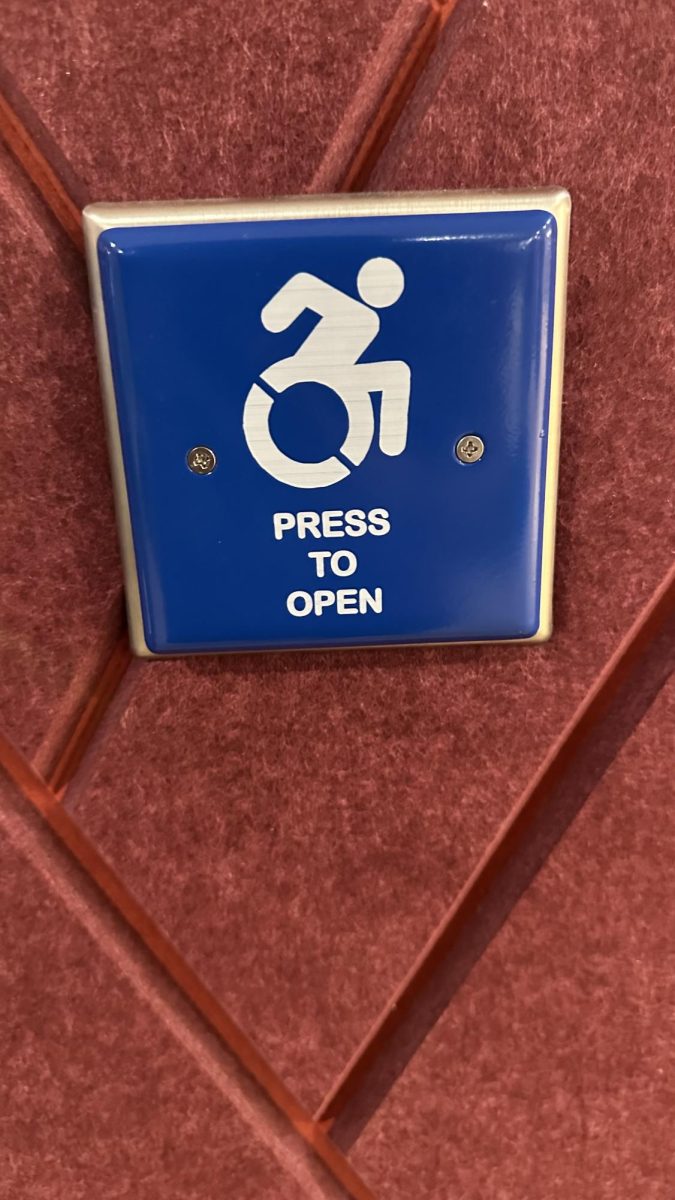
In a recent conversation about physical accessibility on campus, students described how navigating Union often requires planning routes not for convenience, but for access. Building without automatic doors can force students to rely on each other. Elevators, even when present, can be tucked away, difficult to locate, or entirely out of service. Even short distances become complicated when the most direct route includes stairs or uneven walkways.
However, students have emphasized that the issue is not always dramatic. It is structural. Accessibility gaps appear in everyday spaces: residence halls, academic buildings, and common gathering areas. A classroom might technically be accessible, but the path to reach it may not be. An entrance may exist, but not where students naturally approach.
Weather conditions further complicate access. Snow and ice can narrow pathways, make ramps difficult to use, and lengthen already indirect routes. Students described needing to plan their movement around campus carefully during winter months, accounting for which entrances would be cleared and which paths would remain navigable.
The unpredictability of access also emerged as a concern. Students said they often have to memorize which buildings have working elevators, which doors are easier to open, and which routes avoid stairs. Rather than moving freely between spaces, they described planning ahead, sometimes choosing classes or meeting locations based on accessibility.
Accessibility isn’t just about compliance. It is about independence. Being able to enter a building without waiting. Choosing a route, not the only possible one. Suggested changes include adding in more automatic door openers, improving signage for accessible entrances, and prioritizing snow removal along accessible routes.
A detour around a building may seem minor. But when it happens multiples times a day, at every class, every meeting, every stop, the long way becomes the default. And for some students, that route is still the only one available. Union, as of right now, is not a very accessible campus, and future renovations should account for this discrepancy to be inclusive to all students.