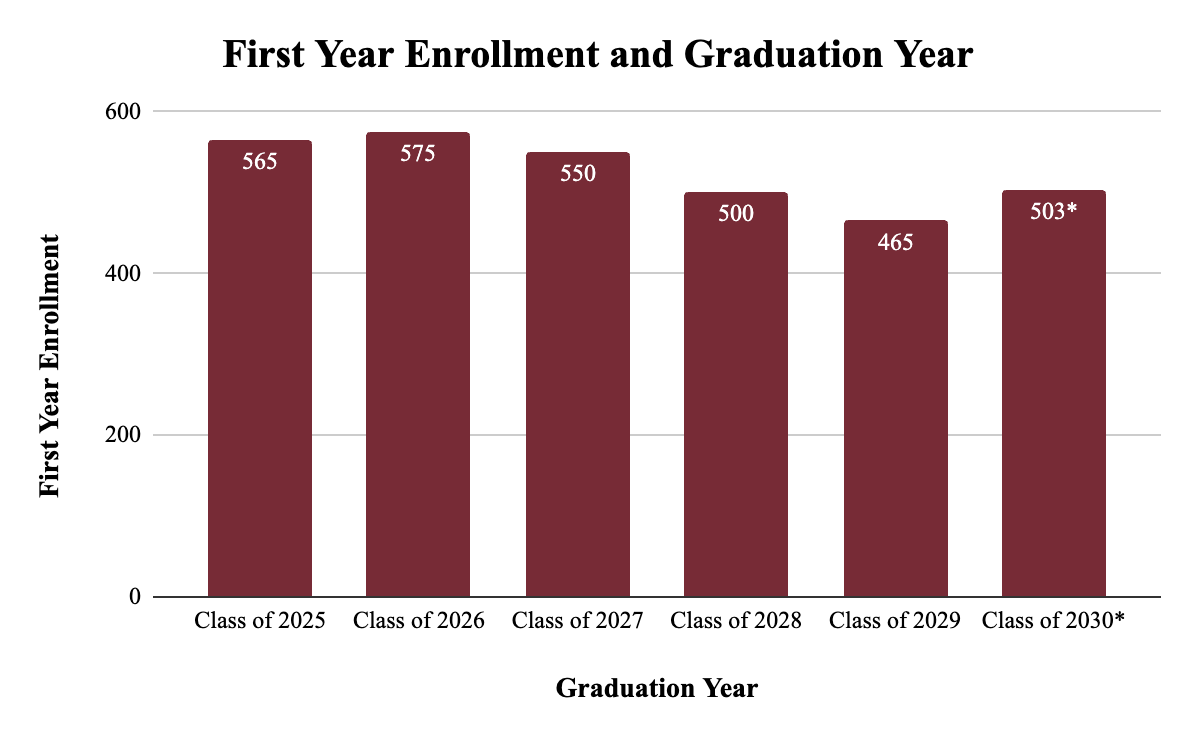

On Tuesday, February 3, 2026, President Elizabeth Kiss emailed Union students and announced two actions that the administration has taken: the creation of a faculty Early Retirement Incentive Program (ERIP) and the transition of dining employees from being employed by the college to being employed by the college’s dining partner, Bon Appetit. These actions are in response to decreased revenues amid Union’s enrollment decline, as the college states that personnel account for two thirds of operating costs.
Kiss first announced that the college is offering an ERIP program to all faculty and staff who are at least 60 years old and have worked at the college for at least 10 years. Concordiensis obtained a Q&A document sent to faculty and staff about the program. The document explains why this decision has been made and addresses eligibility and financial logistics, stating that “While the upfront cost of the incentive is significant, it is a strategic investment in the College’s long-term financial health. By providing this one-time incentive, the College can realize permanent salary and benefit savings over the coming years. These savings are essential for maintaining a balanced budget and ensuring we can continue to support our mission, and remaining employees, for decades to come.”
The incentive program provides two weeks of base pay for every year served at the college. For example, if an employee has 10 years of service, they will receive 20 weeks of base pay. Employees who are covered by a Union health insurance plan will also receive a $15,000 lump sum healthcare subsidy to the retiring employee and an additional $7,500 to an eligible covered spouse. While ERIP eligibility opens at age 60, Americans are not eligible for Medicare until 65, potentially leaving a gap in healthcare coverage for some who participate in the ERIP program. At the student town hall with President Kiss on February 9, Kiss responded to a student question about this, acknowledging that this amount would not be able to cover healthcare premiums but stating that the college could not responsibly give more than the plan entails. Kiss suggested that some staff and faculty facing coverage issues may be able to enroll in their spouse’s healthcare plan.
Employees have until the end of the day on February 27, 2026 to return a completed interest form about opting into this program. A week later, they will receive detailed information about their ERIP package and have until March 31, 2026 to accept it. Employees are not required to accept the package if they indicate their interest in it.
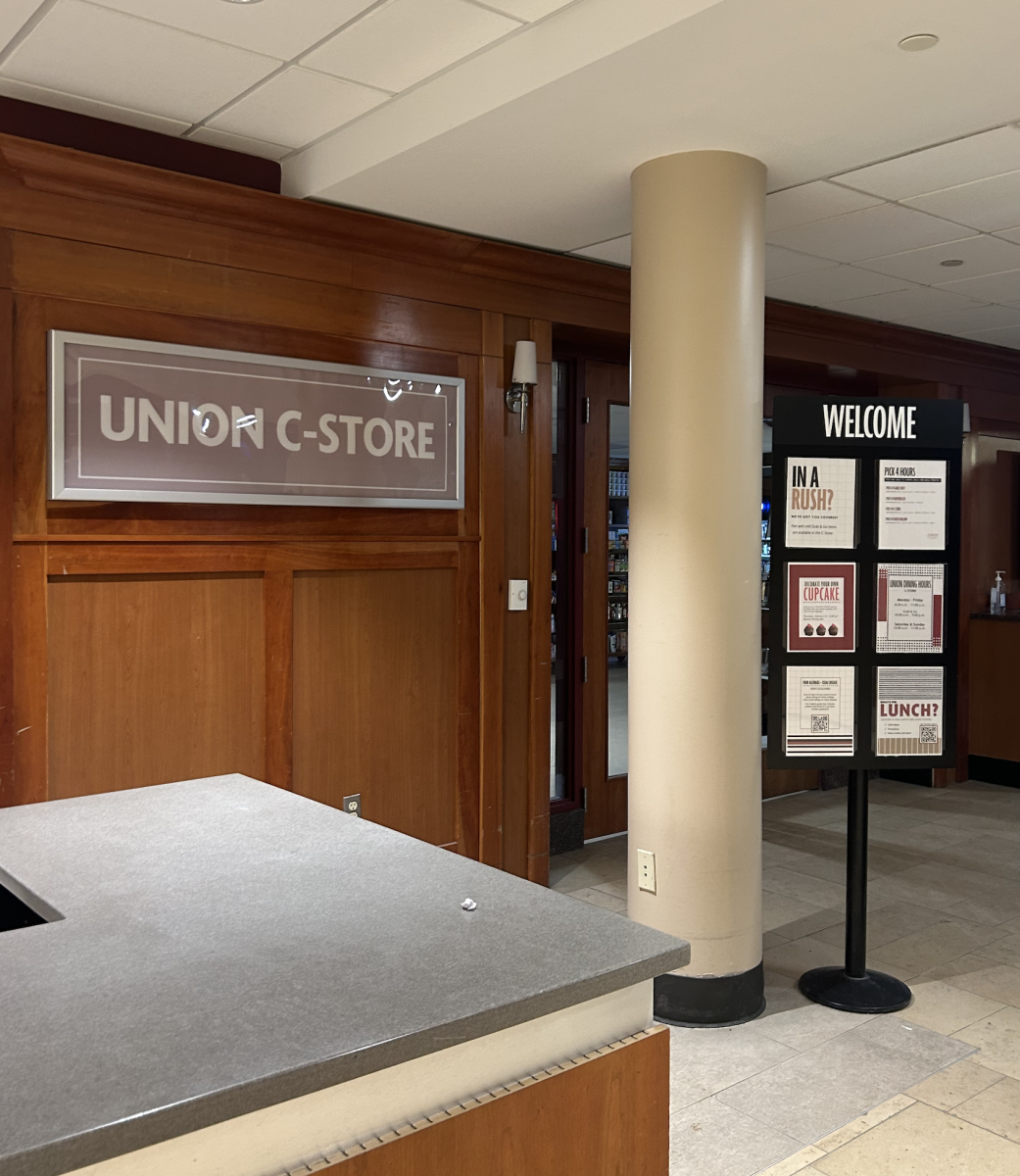
Kiss also announced in the email that the college is changing the structure of its dining operation. “For years, our dining staff has been split between Union and our outside partner, currently Bon Appétit. To provide a more consistent experience for these valued team members and our students, we are moving to a unified team under Bon Appétit.” Kiss said in the email sent to students. Current Union Dining employees will remain employed with Union through the end of the spring term.
Kiss and Dean of Students Annette Diorio met with dining workers in person to share this update. At the student town hall on February 9 (which Concordiensis covers in a separate article), Kiss explained that dining workers had four options to choose from: take the ERIP (which about ⅓ of workers are eligible for), interview and get hired by Bon Appetit, interview and get hired for other positions on campus, or take a severance payment.
Kiss stated that while Bon Appetit employee pay is higher, Union’s employee benefits (such as healthcare) are better. She also reiterated the college’s efforts to ensure that employees will not have a lapse in healthcare coverage while in transition, emphasizing that the college was committed to bridging the gap in coverage while admitting that technical details still needed to be worked out with Union’s insurance provider and Bon Appetit.
While many positions with Bon Appetit will be open to current Union Dining employees, Dean of Students Annette Diorio has stated that there will be fewer positions available and that not all current dining employees will be able to be rehired. Kiss stated that the decision to reduce the number of dining staff was partially due to safety concerns, claiming that some areas are so overstaffed that it is dangerous for workers to move around in them.
The college has described these decisions as being made towards a goal of adjusting the staffing to fit the size and needs of the student body. Kiss stated that in addition to addressing overstaffing in dining, the retirement incentive plan will allow the college to reevaluate what academic faculty is needed, stating that a shared governance process with the faculty is used to determine if departed faculty is replaced. She also stated that departed professors may be replaced with assistant professors, who are not paid as highly as professors who have been with the college for a long time, or that they may be replaced with non tenure-tracked lecturers.
The college has stated that these decisions will not affect the student experience, in line with a recently developed set of institutional principles that emphasize that the college seeks to prioritize maintaining the quality of the student experience above all else. However, these recently announced decisions have generated significant controversy among members of staff, faculty, and the student body, many of whom feel that the decisions are unfair and significantly detrimental to staff, and that their relationships with staff are a fundamental part of the student experience and campus culture.
Mikai Kellebrew ‘27, a student who works in dining, is among those who have criticized the school’s decision, stating that he thinks that it is unfair to ask dining employees to adjust to a completely new system where they must interview with bon appetit for a position that they are not certain to receive and where they are not guaranteed the same role, pay, seniority, or benefits. He also criticized that a contract was signed without meaningful input from students or staff, stating: “Students attend this school and rely on dining every day, yet it does not seem like their voices were included before this major decision was made. More importantly, the Union dining staff, many of whom have worked here longer than some of the current managers, did not appear to have a real say in a decision that directly affects their livelihoods.”
Dr. Megan Ferry, a professor of Chinese who researches cultural studies, also shared her criticism with Concordiensis, arguing for the importance of community to the student experience. She described how central dining workers are to the campus community: “Where do the students have their most experiences with the people in this community? With the faculty, with the dining services. Everybody eats. And everybody engages with their faculty members and with the dining services. It is in this place where you have the most human interaction. The dining staff know so much about, and care so much about every one of you. I’ll be going over and socializing with them. They’ll say that the student there just got dumped by his girlfriend. That student there is waiting anxiously for a phone call about the internship. That student I’m really concerned about hasn’t been eating right. This is across all of the dining services. They really are invested in the students. They speak to the working conditions as poor working conditions, but they’re invested not in their material well-being, but in the social well-being of the community. These recent changes are hitting right at the heart of the student experience.”
A different dining worker who spoke to the Concordiensis echoed this sentiment of community: “You guys become very close to us. We know you. Like, we know you got a cat. There’s a lot of places where it’s not like that, you know? This is going to hurt those people who have those relationships built with students the most, because they’re the ones who have been here longest. It’s a community. People come in, and they’re just like, hey, can I tell you my problems? You know, you don’t have your mom here or whatever.”
She also described worry among the staff: “There’s a lot of people that are not married. I’m not married. I don’t even make $17 an hour. I came here because of the benefits. And because of the tuition for my daughter. And that’s out the window. Now, even if we were to switch over to Bon Appetit, you have to work, like, a thousand hours before you get insurance. So I’ll be out of insurance after June 30th. There’s a lot of people that don’t know what they’re going to do.”
“Although early retirement is presented as an option, when I have spoken with staff members, it feels to them less like a benefit and more like being pushed out. For many long term employees, this change feels destabilizing and undeserved,” says Kellebrew. “it gives the impression that the institution is prioritizing financial efficiency over the people who have helped build the campus community for decades. These workers are not just numbers in a budget. They are individuals who have committed years of service to Union College.”