
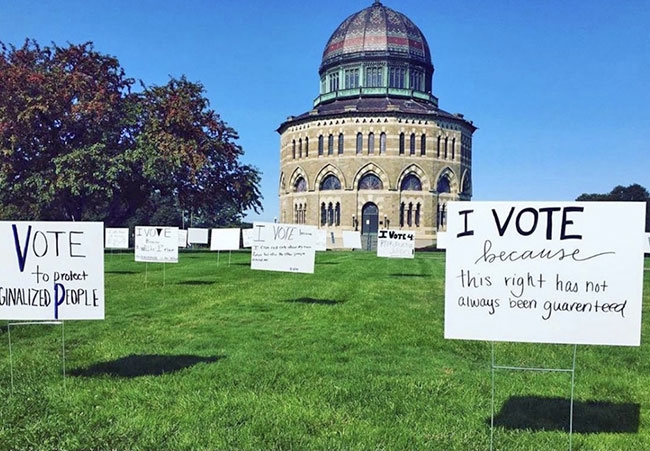
Walking across campus lately, it feels impossible to ignore the tension in the air. Headlines flash across our phones between classes with atrocious things happening around the nation. Some students scroll part of the news altogether, exhausted by the constant cycle of conflict. In a time when politics feel overwhelming, many college students are left wondering how to stay informed without burning out.
The current political climate in the United States is marked by polarization, and as Political Science Professor Oker Ibrahim states, “the reason you support something comes from your hatred to the opposing thing rather than you actually agreeing with your side.” Rather than reflecting whether the policies align with our values and belief system, many people are driven by frustration or fear of the “other side,” leading to an extreme division between the two sides and making meaningful dialogue feel nearly impossible.
Think about your social media algorithms. They are purposely designed to give you content that will keep you constantly engaged and hooked on, making your feed essentially an echo chamber that reiterates your old beliefs. Over time, this constant reinforcement narrows our perspective, and we stop encountering opposing ideas that could possibly challenge us.
For many students, this creates a sense of paralysis. Some feel pressured to have strong opinions on complex issues without fully understanding them, while others disengage entirely to protect their mental health. Both reactions are understandable. But Ibrahim emphasizes that opting out of civic awareness comes with consequences. When young people step back, decisions are still being made. Just without their voices being represented.
Being politically educated does not mean consuming every breaking headline or arguing with strangers to prove your side. “Nothing comes for free. You have to fight, and fight can come in different forms.” He explains that fighting does not always mean protesting in the streets or engaging in heated debates online. Sometimes, it looks quieter: educating yourself, questioning your own belief systems, or having thoughtful conversations with people who disagree with you. Civic engagement can be more than just casting a vote; it can exist in everyday moments and starts with making active efforts to understand the system that shapes our lives.
Becoming more civically minded does not require having all the answers. It begins with curiosity in forms reading beyond headlines, checking sources, and listening with intent to better understand rather than just respond. At a time when it feels easier to scroll past the news than confront it, students are left facing a choice. They can allow exhaustion to dictate their involvement, or they can choose to engage thoughtfully. When young people take the time to educate themselves and participate, change can finally come forward, even in small ways that contribute to shaping the future.