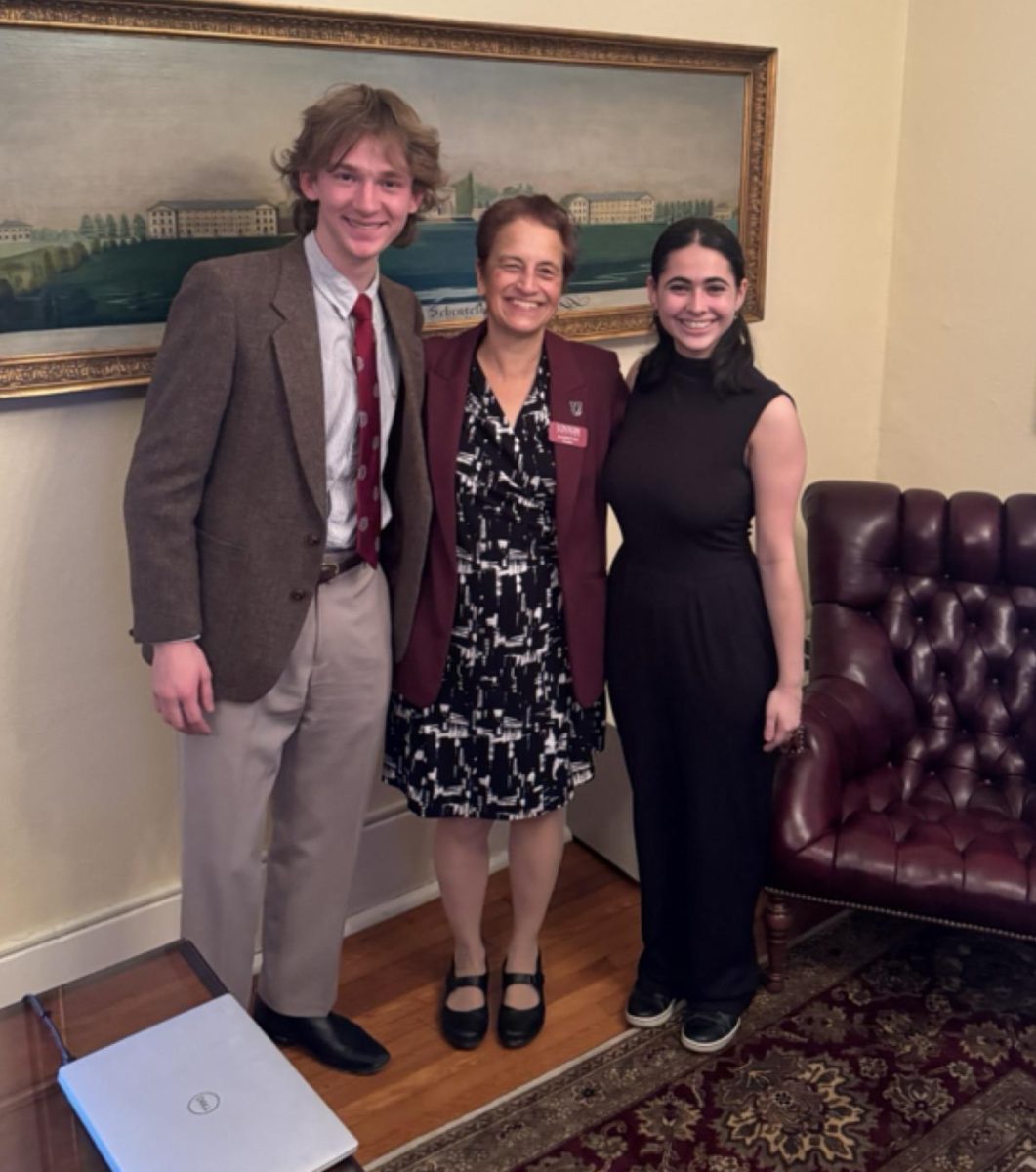
Concordiensis recently sat for an interview with college president Elizabeth Kiss. The following transcript has been lightly edited for clarity.
Concordiensis: So we’re curious to hear from you something that we have spent some time thinking about to be here. And we’re curious, like, what sold you on Union? What made you decide to take this job of all places, and also, about a trimester in, what has come up that was unexpected?
Kiss: Yeah, that’s great. So what sold me on Union, you know, was very much, I like to refer to it as sort of Union secret sauce. You know, the fact that we are a liberal arts college that also offers engineering and computer science. You know, that whole breadth and the whole history of innovation that got us there, you know, that we have been offering engineering since 1845.
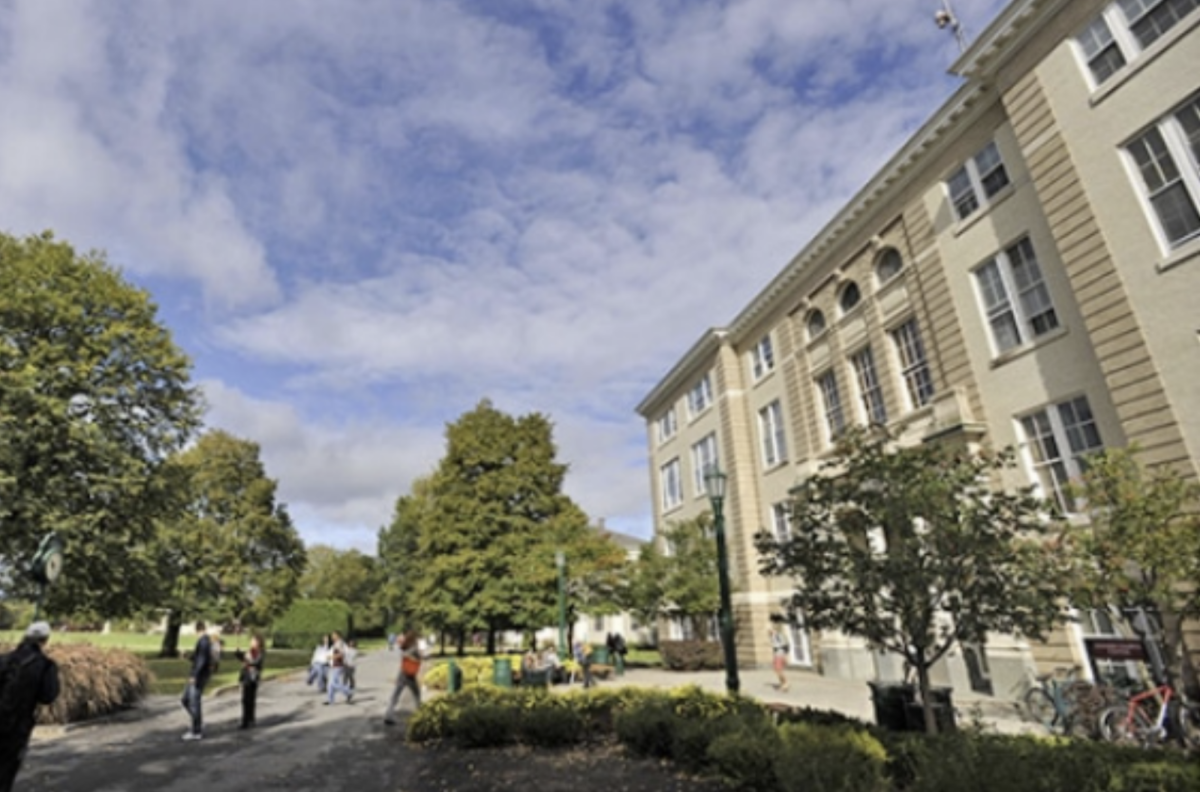
That was one of the things that really sold me on Union because I love small residential liberal arts colleges. I’m the product of one. I’m a Davidson alum and I’ve been president of one, Agnes Scott College. So I, you know, I think there’s something about that small residential college community, but what makes Union very distinctive is that, you know, we’ve got a much broader range of disciplines than most liberal arts colleges do. And so I was sold on that because, as I think about how we should educate students today, being able to draw on the humanities and the arts and social sciences, but also on engineering and computer science and the natural sciences is very exciting to me. That was number one. I also fell in love with the campus. It is pretty, it is so beautiful. You know, the Nott, Jackson’s Garden. Just that whole sense of this being the oldest planned campus in America, the fact that it’s in such a beautiful part of the world, you know, with the Adirondacks and the Catskills and the Berkshires. So that was very special to me as well. So those were some of the things. And I guess the last thing I would say is in the search process, what I loved, you know, I met some students and faculty and trustees, on the search committee. And what I really appreciated was that it was very diverse, you know, diverse fields that they worked and everything. Everybody absolutely was so passionate about Union. And they were also very, kind of, clear-eyed that this is a challenging time in higher education and you know, we’re gonna have to continue to innovate and grow. And I loved that combination that they were sort of in love with the place, but there wasn’t a sense of rigidity, you know, but sort of an openness to change and innovate.
Concordiensis: And we’re really curious what has surprised you since being here.
Kiss: Yes. That’s so funny, because my board chair just asked me that question a couple of weeks ago. So let me preface it with, one of the things I was really looking forward to was, and which has proven to be just as wonderful as I expected, was, you know, we had this great sports tradition and so I was really excited about going to matches and games and cheering on the Garnet chargers, and that has proven to be just as wonderful as I expected. What surprised me was just how wonderful the arts are here, like music and dance. It really started before I started as president. I was here last June and I went to the Japanese drumming performance. It happened to be that weekend. I was just here for a weekend, you know, just kind of getting to know the place, and it kind of knocked my socks off. I was like, this is incredible that we have like 25 students that are part of our Japanese drumming troupe. But then it went on with, you know, Pippin, and Mozart’s Requiem, and the students who performed at my inauguration who were just so incredibly talented. So that’s been the big surprise for me. It’s not that nobody said we had good performing arts, you know, but it just wasn’t top of mind for me. And it’s just been fantastic.
Concordiensis: And from an administrative perspective, have there been challenges that you’ve experienced so far that you didn’t expect to?
Kiss: Yeah, I mean, certainly. I mentioned that I liked the fact that the search committee was very frank about that this is a challenging time. And so I knew that, you know, Union really needs to grow. So that wasn’t a surprise. You obviously learn more as you start working at a place, you know, but what’s been really great, I will say, is that, as I started, and even during my interview, you know, I mentioned that I was very much in favor of doing sort of a data informed study in order to help us figure out what would enable us to grow, so commissioning surveys of prospective students and admitted applicants, really sophisticated ways of surveying students so that you actually get predictive data on which of your ideas, not my ideas personally, but ideas from the campus, would actually drive enrollment growth. And what I’ve been pleased about is that people are very much on board with that. So that’s been, I would say, a pleasant surprise, that as I’ve spoken with faculty and with alumni and with staff and as I’ve also spoken to some student groups about this, everybody’s kind of excited about that. Like, okay, we’re gonna actually, you know, figure out within our market students who are thinking about applying to Union, what could we do to make more of them actually apply, right? And students that we offer admission to, what is gonna make more of them decide to enroll? And to use that then to guide our strategy going forward.
Concordiensis: We are also curious to hear more about what your short and long term goals are as president.
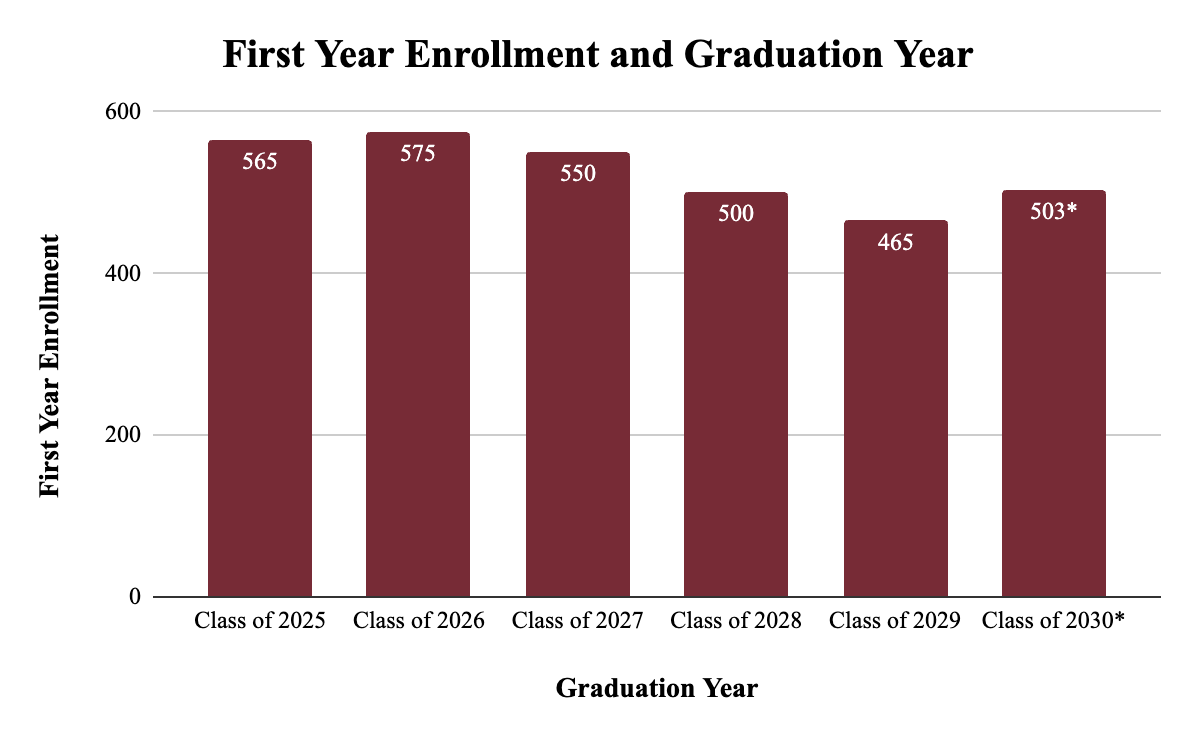
Kiss: Sure. So I would say my short term goal is to complete this study this year. I mentioned this study of our prospective applicant pool. That is a really important thing because that will then become our North Star. So next year will be the year when we receive the recommendations from that study, and then we’ll be working particularly with the faculty, but also I’m envisioning that there’ll be opportunities for students and for staff and all sorts of folks to, to kind of get involved in figuring out how we implement them. So, short term, that’s a big goal. Short term also is to work together with the whole campus community to, to have a really strong class of 2030. We’ve got some encouraging data in terms of how many students applied and enrolled early decision. That’s more than last year. And so I’m excited about that. But we know that students apply to a lot of colleges, and so yield season is coming up. It’s, you know, the next however many months. And it’s very important to mobilize everybody because we’re all in this together.
So faculty, students, staff to make visitors feel welcome, and really try to persuade as many of those students to whom we offer admission to join us. So that’s super important. For me, other things are kind of supporting things that I think are really creative on campus. I mean, some of them, I’m just so happy that they’re happening, like flag football. I’m super excited that we’re launching it. It’s not like I have to do something there, but my goal is to raise the profile of Union by bragging about the fact that we have one of the first intercollegiate women’s flag football teams, certainly in New York state, but I think more generally, actually, we’re really a pioneer in this area. And there’s a couple of cool new majors that faculty are talking about. And I’m excited that they’re thinking about what things are that we could potentially offer. I don’t want to name them just because the faculty still have to work through it. But I’m excited that they’re continuing to ask the question, what are the academic programs that prospective students and current students say, “this is something, you know, I’d really like to take.” So that’s a short term goal.
Longer term, I was just talking to some student tour guides about this. So we’ve launched a task force of the board of trustees that’s focused on residential planning. Because my sense is that with Union, we’re incredibly lucky that we have excellent academic facilities. I’ve been just so impressed by the quality of the academic facilities here. And, and of course with, you know, ISEC was the big building that was built, completed a few years ago. Um, ECSI is the building that’s under construction now, and that will complete the effort of having, especially with our expansion in engineering with environmental and civil, to have appropriate facilities for our academic programs. Where we are less strong is in our residential options for students. You know, the quality of our dorms. And so that is a long term plan. It’s not something I can just go and solve. We have been doing a lot of smaller projects, like I was just hearing that in the last four years, 147 separate projects in the dorms to refresh them. Like in Fox and Davidson this summer, creating some better common spaces. I know some of the Minerva houses are getting new kitchens. You know, all of that is great, but like really thinking about just generally as a residential campus, what’s the range of student housing that we should have? How do we have it be really attractive for students from first year all the way through to senior year? And so that’s a long term plan. Because it’ll frankly cost a lot of money. And I suspect it’ll be a major fundraising priority for me.
So we are in that kind of fact finding, assessment phase right now. So that’s an important long, long-term plan. And then I guess the one other thing I would say about the long-term planning is, you know, I mentioned this, this sense of the Union magic, the Union secret sauce. And so my long-term plan with these recommendations from this study is really to enable Union to strengthen its sort of distinctive market position, you know, to, to have like an elevator pitch that every student and every faculty member can say like, if you come to Union, if you’re at Union, this is what a Union education provides for you. I think we have all the ingredients for that, but we haven’t quite pulled it together. And so that will take a little time, but I hope that within the next few years we’ll get to where people across the country will know Union. We’ll be better known, you know, for what we offer that is distinctive.
Concordiensis: So, rough draft, what’s your 30 second pitch?
Kiss: What’s my 30 second pitch? Okay. So Union is a place where on a small campus, students can get exposed to the whole range of disciplines from the creative arts and the humanities through to engineering and computer science all at a very high level, which really prepares them to draw on all of those perspectives to be able to solve problems and to be change agents and leaders in the future.
Concordiensis: So you did make use of a similar study when you were at Agnes Scott, is that right? How did that contribute to Agnes Scott’s institutional success?
Kiss: Yes. It was a tremendously exciting study. So what the study showed, it’ll be different for Union, right? Because it’s a very different institution. But the recommendation that came out from that study was that Agnes Scott really needed to lean into global learning and leadership development. So that’s what the study produced. And so what we did was, and it was a lot of heavy lifting by the faculty and others, but we kind of redid the core curriculum so that it was all focused on global learning and leadership development. Every first year student traveled abroad as part of a course. And the whole kind of core curriculum was focused on leadership development. And then there was a sophomore class leadership opportunity in your spring semester.
So basically infused through your whole four years. And we called it summit. So Summit became like, what do you get at Agnes Scott that you don’t get anywhere else? Summit. And it’s focused on global learning and leadership development. And what it produced was, first of all, enrollment growth. So about a 30% increase in the size of the student body, which was really exciting and certainly strengthened Agnes Scott a lot. And Agnes Scott has now been eight years in a row, the number one most innovative national liberal arts college, according to US News and World Report. So it’ll be different for Union because Union’s DNA is different. But what I’m hoping for is that we have a sort of similar journey where we test ideas in the marketplace. We figure out what’s actually gonna drive growth. We turn that into a really powerful value proposition that fits who we are as a college, and then that will drive growth and make us even better known than we are now.
Concordiensis: Now you mentioned growth a few times, and we’re curious what exactly you mean by that.
Kiss: So we’ve had a couple of smaller first year classes in the last few years, and we’re not planning to dramatically change, like, turn it into a college of 5,000 students. That’s not the goal. But to get back to, let’s say, 2200, 2300 students. We’re at about 2000 students right now. We have the physical infrastructure for a larger student body at, at this point. So it’s something that we could do. And I think it would be good for all kinds of reasons. In terms of finances, in terms of the student experience. I would also, and I was sharing this with the faculty this week, I think it’ll be really interesting to explore graduate programs. You know, Union has offered graduate courses in the past. Would that be something that would be a net benefit for Union for us to implement, and if so, which ones? You know, are there master’s degrees that we could offer?
And that could be a really good benefit for Union students also, so that they could stay and do a one year master’s, but also for others to come. So in terms of growth, I’m also interested in thinking about that in the future.
Concordiensis: What’s pretty pressing on many members of the Union community’s minds is Union’s financial situation. The situation with the endowment. And we are curious how you intend to address this financial situation going forward, both in the short term and the medium term. And also if you have any updates that you’d like to share since the email that was sent over break.
Kiss: Sure. So one thing I will say, and I think it was in that message as well, is that we are very fortunate to have a $600 million endowment. So that would be the envy of many, many colleges across the country. Agnes Scott had a much smaller endowment. So many colleges have a smaller endowment. So we need to steward that endowment. I’ve been pleased that the endowment is performing pretty well, where it’s earning about 8% a year, a bit more than 8% a year. So that’s a very positive thing. For our finances it’s more the question of how many students we have. In the last couple of years, our first year classes have been smaller, and of course, once a class is smaller, that’s gonna be a smaller class going all the way through all four years.
So that’s why I am focused on, when I think about our finances, I’m really focused on enrollment growth as the primary kind of driver for improving our finances. And what that will enable us to do is to not have to draw too heavily on our endowment, right? Because the endowment is there for us to draw on it. But we need to be careful about how much we draw, you know, what, what percentage we draw on it per year in order to protect it. It’s for intergenerational equity, it’s to protect the value of that endowment for future generations. So, you know, the best is something like 5% per year. And as we grow our student enrollment, we’ll be able to get closer to that best practice of a 5% draw.
Concordiensis: What would you have to say to those who are critical of the Union endowment’s weak performance compared to the S&P500 over the past 25 years and the outsize portfolio management fees Union has been charged?
Kiss: So we did an endowment 101 session this fall. I think actually a lot of those criticisms are really inaccurate. And I’ve heard those criticisms. I know that there are members of the community who are really passionate about making those criticisms. So there is no college in the country that invests in the S&P500. It is true that the S&P500 has been on an incredible tear, thanks to essentially seven stocks. The seven AI related stocks is why there’s been enormous growth in the S&P500. I was a college president when the S&P500 fell like 40%. And so if you are investing in a fund where you’re just putting it there and you’re not touching it, sure you can invest in the S&P500. But as a college we depend on our endowment as a regular source of income every year. This year it’s about 35 million towards our budget that is coming from the endowment. So we have to de-risk, you know, and have an asset allocation, which yes, we are kind of invested in essentially the S&P500 for a portion of the endowment, but we also have to be in other asset classes, and we also have to be in asset classes that hedge against, you know, so that when stocks fall you’re actually protected against that. Because they will fall. It’s not a question of if, it’s when will there be other kinds of big market corrections in the future.
And so what really matters is, what’s been the performance of the endowment? Like how much value has it gained? And our 15 year average is eight, I believe it’s 8.2% return. So that is pretty good. It’s close to the median of college endowments. We did go to a new endowment investment advisor, two years ago, we hired Common Fund, and we are hoping that with a new investment advisor, while we’re still in the middle of this transition, that we might tweak that up a little bit. But what the criticisms about our endowment ignore is that actually the endowment has performed pretty well consistently. Because the most important thing is like, okay, how much has its value increased year over year over time. And when you look at that, it’s 8.2%. Sure, I wish it were 8.5% or something. But, you know, it’s a kind of solid endowment performance.
Now in terms of the fees, and we’re probably gonna end up having to do some more public education of the campus community about the fees, because the fees that we pay depend basically on performance, right? And so we are not paying exorbitant fees. We are paying what the market requires. When people are professional investment managers, if they are outperforming their peer group, then they get a little bit higher fees, but the fees are very much in line with endowment management fees everywhere. What I was trying to explain to several students after the endowment 101 session is, you know, when you are hiring people to oversee a $600 million endowment, they’re not gonna do it for free, right? But they’re not charging exorbitant fees. They’re actually charging a very, very tiny percentage on that endowment on how much your assets are invested. And, I should also add, Commonfund, who manage our endowment, are themselves a nonprofit company. So they are actually in the business of helping colleges manage their endowments and it’s to their benefit for the endowment to perform well.
Concordiensis: So do you have a comment on why the college has withheld data on investment management fees since 2021?
We’ve not withheld data. So let me explain that. Our financials are put on the website, you know, when they’re fully audited and we put that on the, on the website. We’re not required to provide information about every single investment manager fee; that is not a part of what is considered good practice in terms of what’s required with financial disclosures. And so we have been basically following what colleges do in terms of what we disclose. Having heard this question now, I have talked to Commonfund about, can we share more information about, you know, what the investment management fees are, and we’re happy to do so. And my plan is just as we did at the Endowment 101 and Commonfund was there, so our investment managers were there at that session. We’re happy to continue that process of educating the campus community and sharing more information about the fees, but what I can absolutely tell you is that we are not paying exorbitant fees for our endowment management. They are very much in line with how endowments are managed at every college.
Concordiensis: We’re also curious, what kind of experience do you think you bring here from being at the Rhodes Trust?
Kiss: Oh, that’s a great question. So one of the things I really gained by being at the Rhodes Trust was that we operated at Rhodes in a very, very international context. And so I am hoping over time, to be able to draw on that experience to increase our international student enrollment at Union. This is a tough time at the moment for reasons of geopolitics and international visas and all of that. So this is not a short term goal, but I am really, really keen to do that. I’m also really excited to, you know, having run the Rhodes Scholarship and had a lot of experience with other sorts of similar graduate scholarships, I’d love to have more Union students apply for these scholarships. We have a recent Rhodes Winner, Ty Gamble. He’s class of 2021? Yeah. It is so cool that Union has had two Rhode Scholars in our history. And I know we have a lot of Fulbright winners and everything. And so I would love to do more with that to support students who want to apply for these really prestigious graduate scholarships. So I’d love to be able to do that. And also to kind of draw on the Rhodes network, to bring it to Union in various ways. So I’ll just give you one example. During my inauguration, we had a panel on ai and one of the speakers was from the University of Chicago, but he’s a Rhodes Scholar from India actually.
And so he was very cool. He loved being here on this Union panel. He runs a global fellowship program in technology, sort of humane tech, that’s focused on students from the global south. And so he’s really interested in exploring, could there be some sort of partnership between Union College and his fellowship program, or maybe even a master’s degree, you know, that would be an international master’s degree. So all very early stages, but it’s an example of, you know, a way in which I feel like I could draw on the network that I gained from being at Rhodes for seven years, and have it hopefully be a resource for Union students and the Union community.
Concordiensis: We’re curious to hear a little more about you. What’s your favorite part about Schenectady? What do you like to do here? What do you like to eat?
Kiss: I think Schenectady is great. I think it’s such a cool place. What, what are some things I like to do? Well, you know, in the summer and fall I loved getting up into the Adirondacks. We went up to Lake Placid. I’m a hiker, so I’m looking forward to more hiking. It would have to be snowshoeing right now. Although I actually quite like snowshoeing. I haven’t done any yet, I don’t have my snowshoes here, but I might pick that up. In terms of Schenectady though, I’ve really enjoyed the restaurant scene. There’s a number of really great restaurants here. I was just at Milas last night, which is an excellent restaurant. I love Shaker and Vine. I love Simone’s Kitchen. I mean, there’s just great, great, great restaurants, and for a relatively small city, it’s an unbelievable range of excellent restaurant options. I of course love our new hockey arena and going there. I haven’t been to Proctors yet. True confessions. Bad. But gotta do that. I’m looking forward to getting to proctors. But you know, something I have done, which I really hope more Union students do, is we have these amazing concerts in Memorial Hall that are chamber music, classical chamber music. So I got to hear Emmanuel Ax, who’s, you know, a really, really famous musician. And then last Sunday was the Brentano Quartet. And it’s free for Union students. So I’ve enjoyed that, the offerings that are available here. Really, really great stuff. And everybody’s very welcoming too.
Concordiensis: Now we’re curious if you don’t think that expanding Union to graduate programs would kind of take away from the liberal arts undergrad focus?
Kiss: Yeah, I don’t think so. I think Union will always be primarily an undergraduate institution. And so even in terms of the scale, you know, probably the vast majority of our students would be undergraduate students, but I know that historically Union did offer an MBA. There were a number of things. There was actually a Union graduate school, and I’ve run into people in Schenectady who are passionate Union alums because they did a Union graduate degree. You know, it was housed in Lamont. And I think it was never that big. I think it was probably like several hundred students rather than two thousand, you know? But it would be, frankly, another revenue stream for us. And so just being practical, I think every organization needs to think about our primary revenue streams, which are our endowment, student revenue, and then donations, and some kind of rental revenue, and things like that. But it would give us another source of revenue. But I think it could also sort of enrich the life on campus. You know, it could be a benefit to our undergraduate students to have some graduate students around.
It could also be a way of making better use of classrooms in the evening and in the summer, for example. So it’s very early days in terms of thinking about graduate programs, but I think a lot of liberal arts colleges are looking at this. But just really thinking about, could we expand our impact by having some graduate programs. I should, by the way, also mention, because you had asked about my short term priorities. You guys may be familiar with our Leadership in Medicine program where students can get pre-admitted to Albany Med, and there’s an Albany Law School program as well. So we are looking at the Simon School of Business. We’re not just looking at them, we’re talking with them for a kind of MBA pathway for students. Which would be really cool, because Simon School of Business at University of Rochester is a very highly ranked business school. So in addition to thinking about, could there be graduate programs or certificates that we could offer, I’m also interested in pathway programs for our students where it could be part of the draw to come to Union. Just as currently it’s a draw that you can be in this Leadership in Medicine program, it could be a draw that you have these options for these pathway programs.
Concordiensis: A common sentiment we hear is that, oh, Union is really ignoring the liberal arts, and especially considering the hiring freezes, we’re curious what you’d have to say to people with that sentiment.
Kiss: Yeah. I don’t think we’re ignoring the liberal arts at all. And I should say the hiring freeze is really about staff, and you know what that means is that if somebody leaves, we really try to think about, is there a way to not replace that position without negatively impacting safety, compliance, the kind of core quality of the student experience on the faculty side. We are continuing to offer and invest in our humanities and arts disciplines.So I don’t see us as pulling back at all. I know that there’s been some major investments recently in engineering from donors, and that’s wonderful. You know, President Harris brought civil engineering back, which had a lot of alums who were upset when it was discontinued, and it’s wonderful that that’s come back, and environmental engineering, which is such a great field, but that’s not to the detriment of the humanities.
Concordiensis: And we know there’s also been a decent amount of upset over a Union planning to discontinue the housing for certain staff workers, and we’re wondering if you’d like to make a comment on that.
Kiss: Sure.You know, we are a residential campus for students, and we’re not really in the business of housing staff or faculty, so the decision that the college came to was that we really needed to kind of get out of the business of being a landlord for a faculty and staff. We obviously have given people a lot of notice there. But it’s focusing on our core mission, right? Our mission is undergraduate education and as a residential campus.
Concordiensis: Any hints to what kind of new majors we might be looking at?
Kiss: I can’t, I shouldn’t tell. Hopefully later this spring, we can give you a scoop when the faculty approves. But you know, there’s a whole process through shared governance where it has to go through different committees and then come up for a vote.
Concordiensis: Since you’ve mentioned a lot about growth. Is there a sort of rough endowment target or ranking target or kind of peer school that you think you would like to see Union get a little bit closer to?
Kiss: These are all things that I am hoping to raise over the course of my presidency, to raise additional funds for the endowment. One of the statistics that I often mention is that only 15% of the financial aid that we give to students is backed up by endowed scholarships. So I would love to raise more endowed scholarships, right? So that will increase the value of the endowment and it’ll also mean that more of our student financial aid is actually backed up by funds that are dedicated to that purpose. So that’s gonna be important. And you know, the most important thing is the quality of the Union student experience and I will continue to work hard with everybody else to continue to strengthen that. And the rankings are the rankings. I love that we’re up in engineering, we’re now ranked 21st, which is really great. We rank second in terms of the quality of our lab space. 13th in terms of early career earnings. So those are all really good things, and we’ll keep working at everything else. So I don’t wanna set a target.