
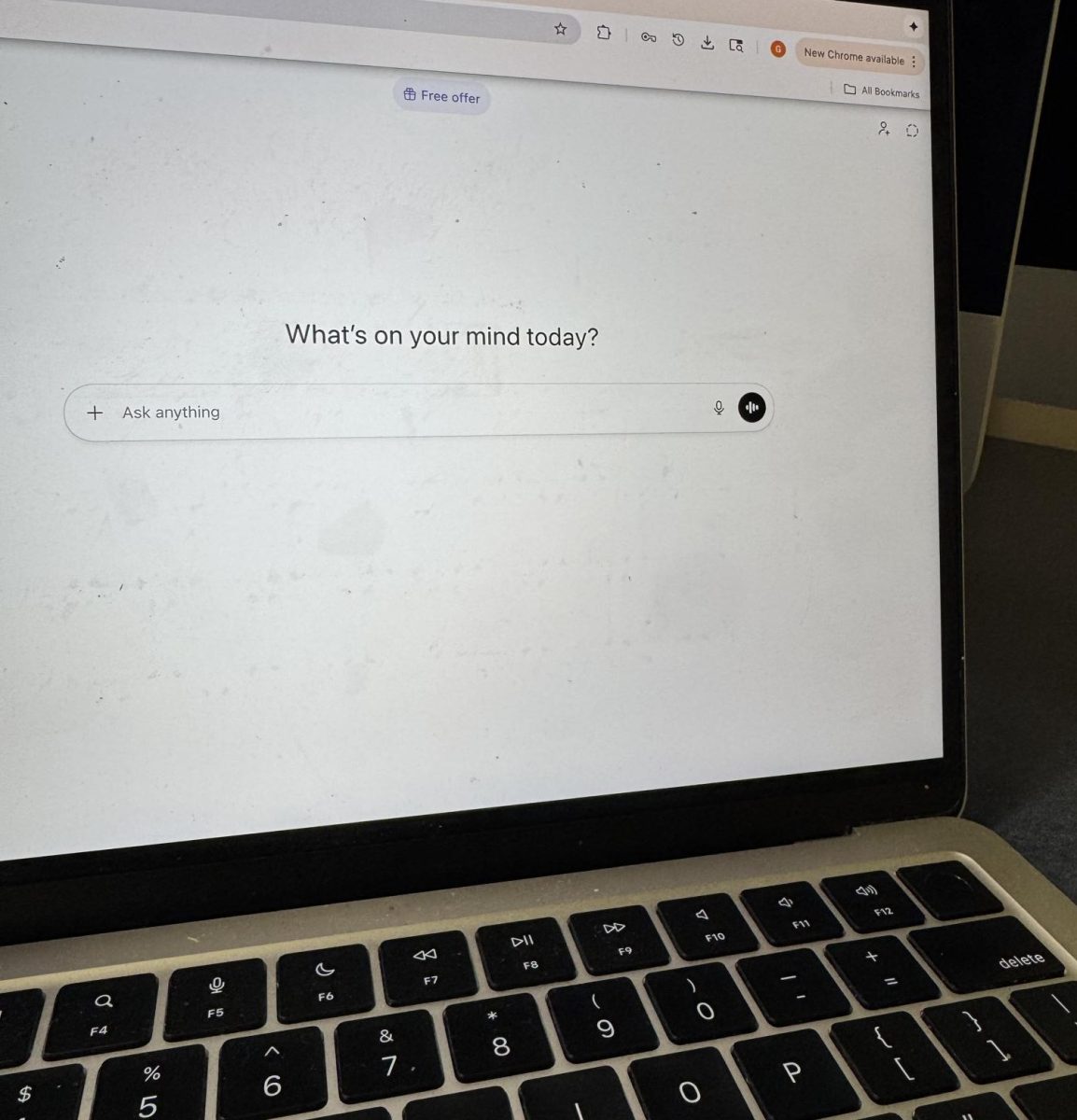
It is no surprise that AI is not going away anytime soon. Endless amounts of AI generated images and videos have infiltrated across social media platforms, ranging from videos of babies holding in a laugh to satisfying videos of knives cutting through glass or other impossible materials. However, just because AI is becoming more widespread, it does not mean that the technology doesn’t have flaws. There is a large argument around the acceptable use of artificial intelligence, including inquiry on how much is too much, the effect of AI on the natural environment, and the job depletion in the future. AI has sparked lots of debates from the general public, and now this controversy has reached the White House.
First Lady Melania Trump is partnering with Zoom to bring AI to schools all across America, in forms to be easily accessible to any child. At first glance this sounds like a good idea, another resource that students can use to help grow, right? “The Age of Imagination is a new era, powered by artificial intelligence where one’s curiosity can be satisfied almost magically, in seconds.”
The First Lady continues to speak about why curiosity is so crucial. However, she is enforcing the use of AI, which will result in children becoming less imaginative and less curious. Who needs to think about something when you can have a solution with just one sentence typed into a machine or one click of a button?
This opinion has been shared with others on campus. Naomi Nayor ’28 said, “I think her intent to find creativity and innovation in a new platform is understandable, but the impact wouldn’t go well. I believe kids will be conditioned to rely on AI for most of their education, which doesn’t allow them to think for themselves or even completely learn.”
Having a child’s curiosity satisfied in seconds doesn’t urge them to put any effort into their goals and dreams, rather they can just try to find the easy way out. These children who are growing up with AI readily available to them will not need to think for themselves. They are going to become heavily reliant on technology to solve their problems that they may even lose who they are as individuals.
AI is not only a problem for the future of these kids, but it also is not always a safe source to use. “AI is a very powerful resource,” expressed Saniya Dixon ’28, “And it can be dangerous sometimes what you find because it barely has limits, which isn’t safe to be put into the hands of curious kids.”
“Deep thinking, patience, and staying curious are where purpose begins,” said the First Lady while promoting AI, but doesn’t using AI contradict this, as it can immediately satisfy our curiosity? Overcoming challenges is a major part of what makes us the people that we are today, giving us that purpose. The childhood of these kids will consist of them growing up with answers to everything, relying heavily on AI, and being exposed to all forms of media. They will lack in what it means to be human. To persevere challenges and solve for themselves.
We need to become more resilient against AI and have more restrictions in terms of its use. While it is a helpful source, AI usage needs to be more moderated. The intelligence of future generations depends on that, and thanks to this new issue from the White House, the current generation needs our help too.