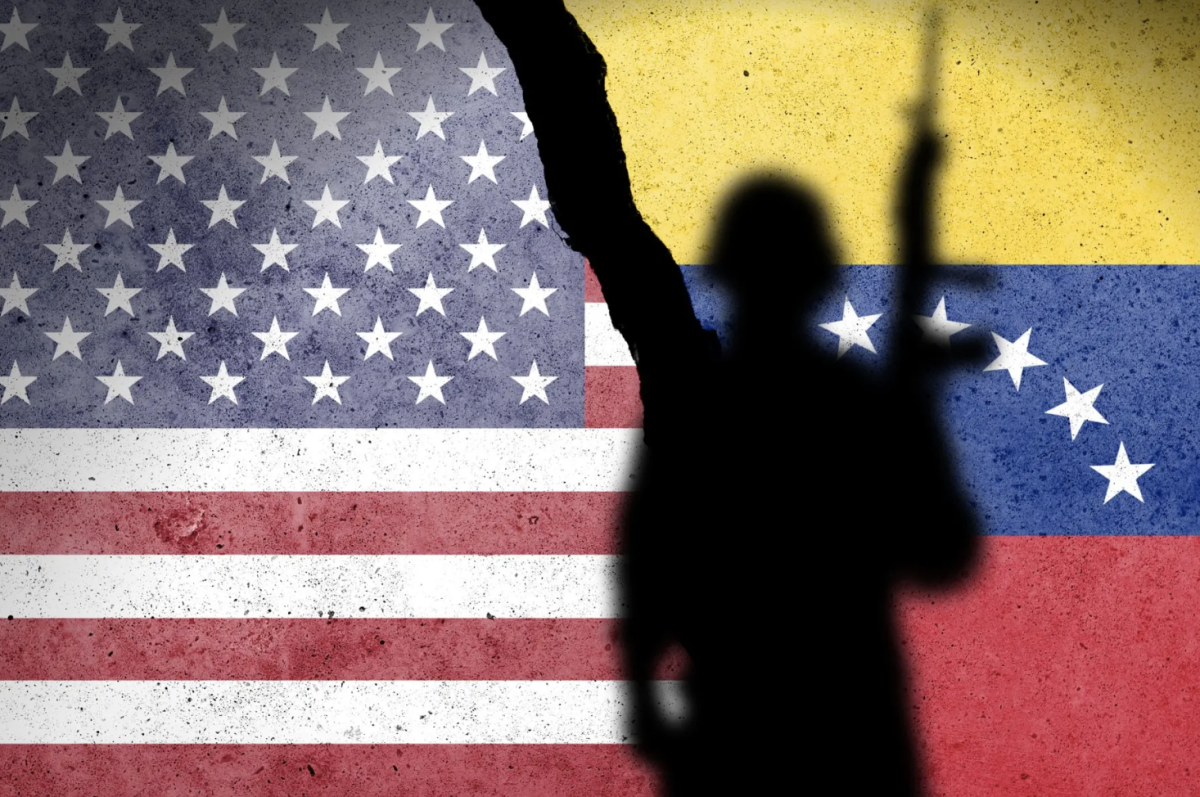
On January 3, 2026, the U.S. Armed Forces conducted a military strike in Northern Venezuela, resulting in the capture of then-Venezuelan president Nicolás Maduro and his wife Cilia Flores. Following Maduro’s capture, he and Flores were transported to New York City, where he faces several charges related to narcoterrorism.
Ironically, Donald Trump fully pardoned former Honduran president and drug trafficker Juan Orlando Hernández from his trafficking charges a month earlier. It becomes even more apparent that the administration’s attempt to frame the kidnapping of Maduro around drug trafficking is questionable when Donald Trump explicitly stated he aims to take control over Venezuela’s rich oil reserves, which have been a target of U.S. foreign policy for decades.
Despite this outward expression of expansionism and imperialism from the administration, I’ve noticed a sizable portion of my peers in college being neutral or uninterested in the U.S. presence in Venezuela. However, as college students, we should be more concerned than ever with aggressive expressions of U.S. imperialist power throughout the globe.
Besides the kidnapping of the leader of a sovereign nation, which has been called a violation of Article 2(4) of the UN Charter by some scholars of international law, college students should be primarily concerned with the humanitarian crisis that will result from destabilizing an entire nation, with the future of Venezuela remaining up in the air as Maduro’s successor, Delcy Rodríguez, recently took power and maintains strained relations with the United States. If not the humanitarian crisis, then college students should be concerned about the domestic impacts Maduro’s kidnapping will have in the U.S., with foreign policy and domestic policy reflecting one another, and marking another shift in this administration’s steps towards authoritarianism.
If the U.S. can illegally kidnap the leader of a foreign nation and face no consequences, then a dangerous precedent is set for both foreign and domestic policy. These discussions on foreign policy become alarmingly relevant when considering Trump’s recent hawkish comments on Greenland.
However, some have taken an optimistic stance on this situation, thinking that the new oil reserves the U.S. brings in will benefit the American economy. Realistically, it will benefit wealthy corporations and CEOs before it ever touches the hands of the average American.
College students have always been vocal opponents and critics of the expansionist policies that have led to the detriment of livelihoods both abroad and domestically, from students protesting the Vietnam War and the draft, refusing to fight for a war without a cause, to the Iraq War, to protesting a blatant grab for oil made by the American government. Now the government is running the playbook again, and some college students are idling by when they should be willing to create change and invigorated to fight for a just cause. In moments like this, silence is not neutrality; it is consent.